

Doyayaki is one of the most popular traditional Japanese sweets, and I always bring some back home when I visit Japan. It’s a hamburger-looking pancake with sweet redbean paste (“anko”) inside. (And yes, this is Doraemon’s favorite food if you know the cartoon!) The most difficult part for making one is probably to find anko, and the rest is pretty straight-forward if you know how to make pancakes. You may be able to find anko in your local Japanese or Asian grocery store if you are lucky, or you can make one on your own if you can find azuki beans (See the recipe here).
Cooking time: 20 mins
INGREDIENTS (2 servings)

- Egg: 1
- Sugar: 35g (3 tbsp)
- Honey: 7g (1 tsp)
- Baking soda: 1g (⅕ tsp)
or baking powder 2g (½ tsp) - Water: 30g (2 tbsp)
- Flour: 40g (5 tbsp)
- Anko: 100g (8 tbsp) or any amount
This recipe yields approximately 6 mini dorayakis (Ø7cm or 3″), or 4 regular-size ones (Ø10 cm or 4″).
BEFORE YOU START
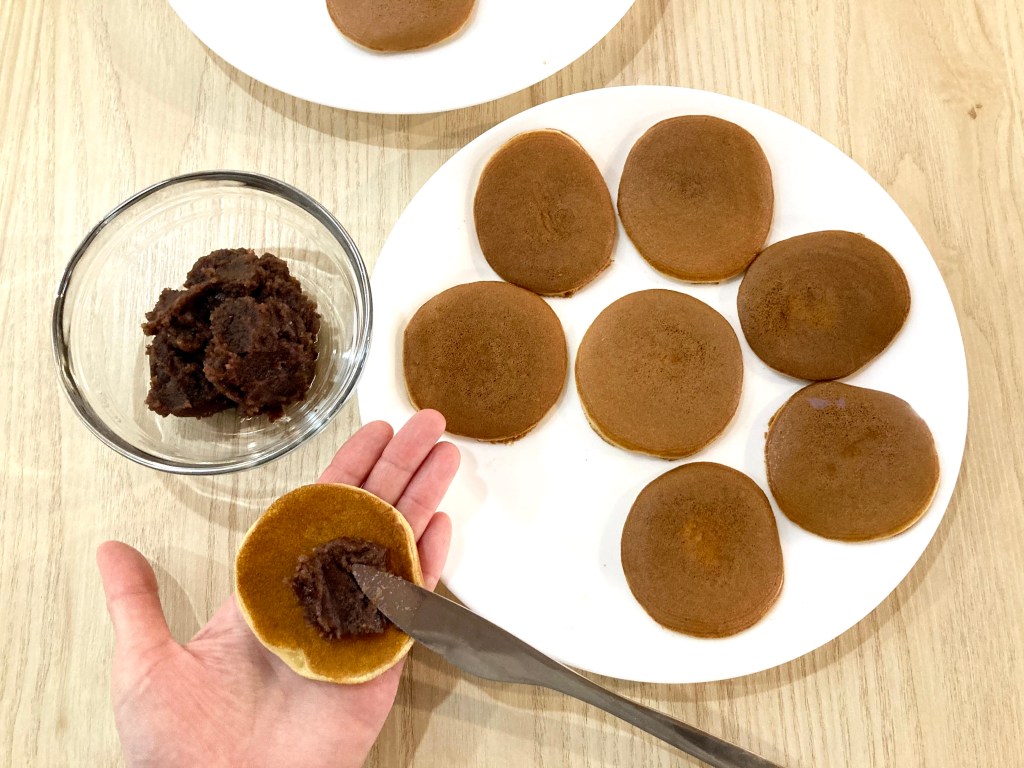
Q. How big is a Dorayaki?
Dorayakis is typically around 10cm (4″) in diameter. But I usually make them smaller, around 7cm (3″) as shown in picture, to make it easier for non-Japanese people to sample them, as not everyone seems to love anko the way we do, based on my experience!

Q. Baking powder vs baking soda
Traditionally, baking soda is used for making Dorayakis as it adds the dark-brown color and a little bit of bitterness, which are the key signatures of dorayakis. I usually dissolve baking soda first in water before adding to the batter, to help it mix better. Baking soda can be substituted with baking powder, but double the quantity as baking powder is not as powerful as baking soda. The pancakes will look a little lighter in color and become fluffier, but you can more or less achieve the similar result.
NOW, LET’S START!
Preheat a non-stick (or very lightly oiled) frying pan on low-medium (level 5 of 9 on my induction cooktop).
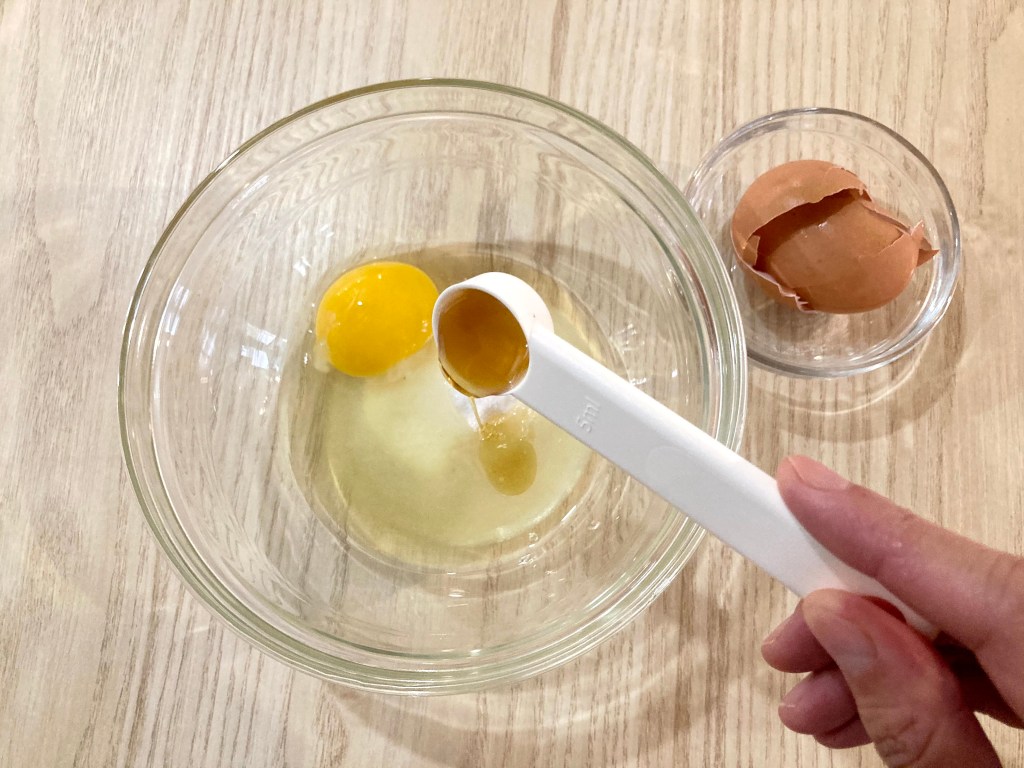
1. Mix egg, sugar & honey. Mix egg 1, sugar2 and honey3 in a bowl.
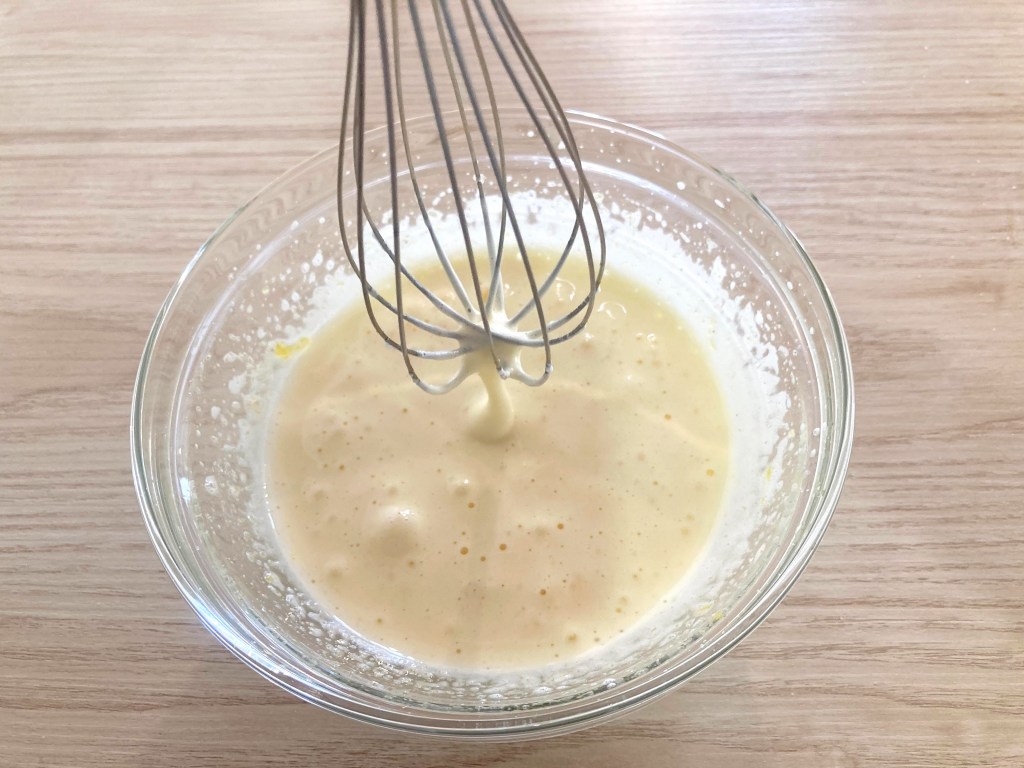
2. Whisk the egg mixture. Whisk the egg mixture until it turns custard color, you achieve a texture more or less similar to the Caesar salad dressing.
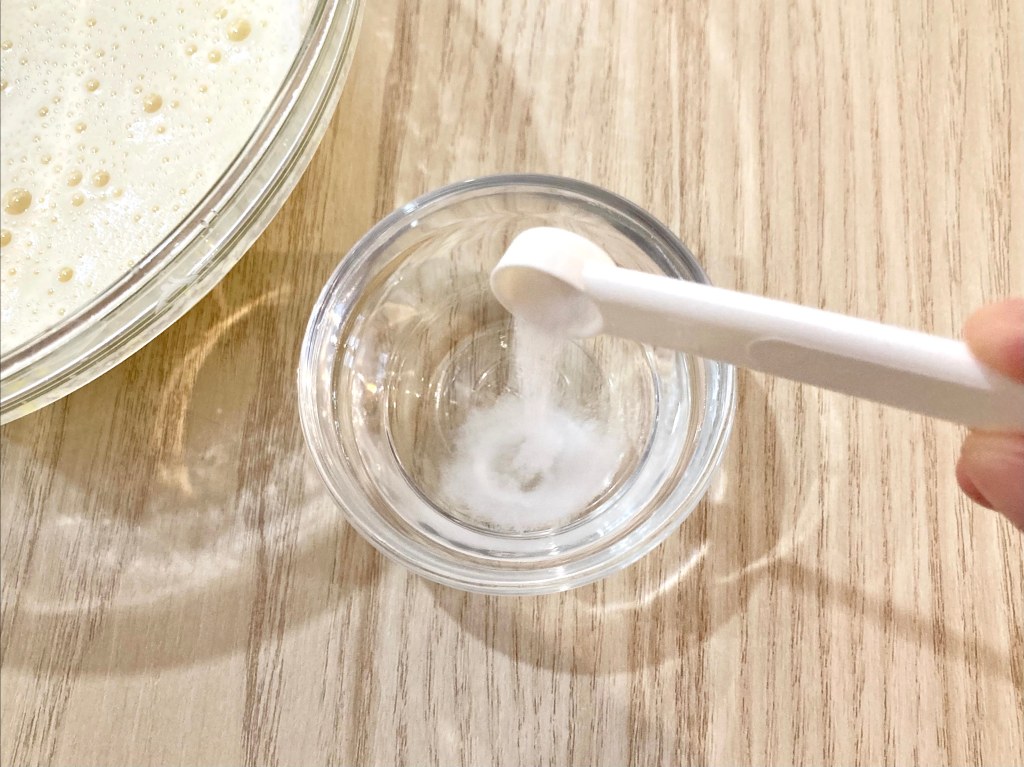
3. Add dissolved baking soda. Dissolve baking soda4 in 2 tbsp of water5 and add it to the batter. If you are using baking powder, skip this step and go to step 4.

4. Shift flour. Shift flour6 in the egg mixture and mix it well. If you are using baking powder4 instead of baking soda, shift it in together with the flour.
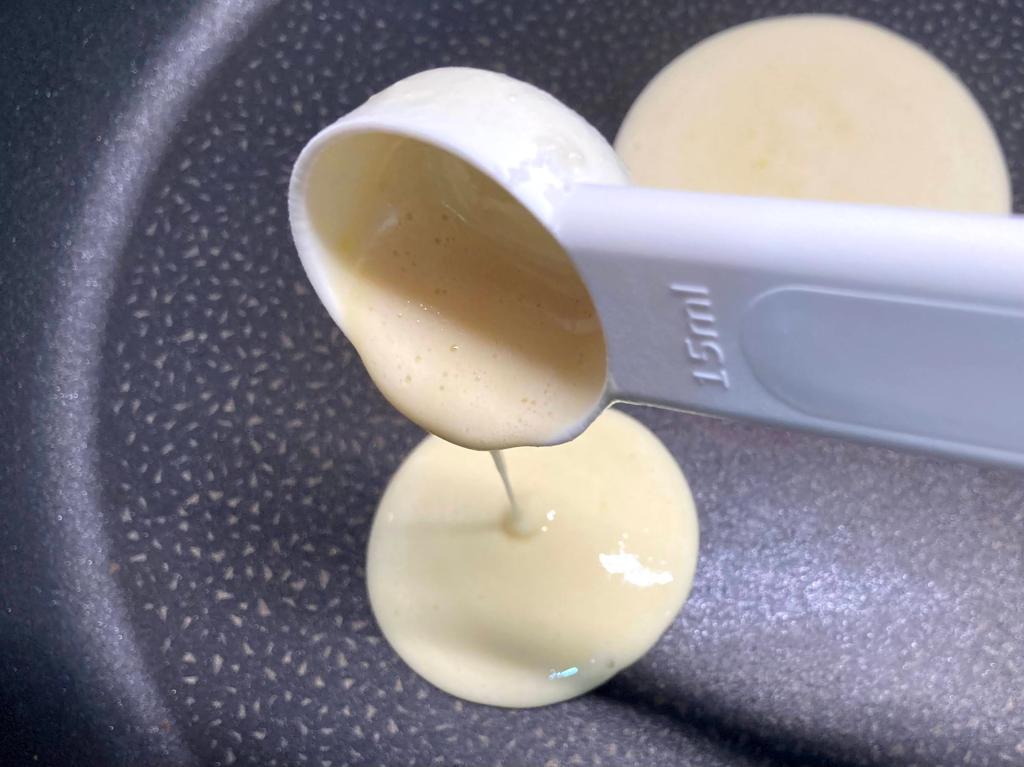
5. Make pancakes. Pour the batter onto the heated non-stick (or very lightly oiled) pan and cook on low-medium heat. One tablespoon (15ml) yields a dorayaki of approximately 7cm (3″) in diameter. When pouring the batter, stay firmly on the same position (which should be the center of the pancake) to achieve a perfectly round shape.
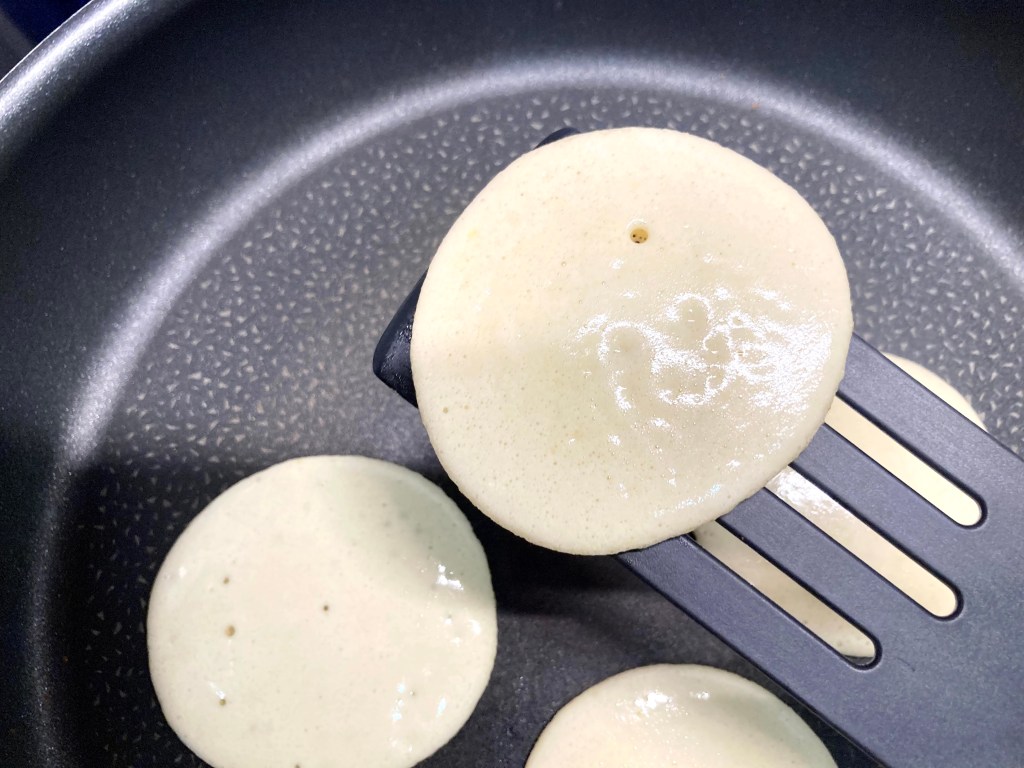
6. Flip. Flip the pancakes when the surface starts to bubble and the edge starts getting dry and round (usually 2-3 minutes on my cooktop). The bottom should be dark-brown dorayaki color (darker than regular pancakes). Honey and baking soda make them darken more quickly than regular pancakes, so check carefully not to burn them.
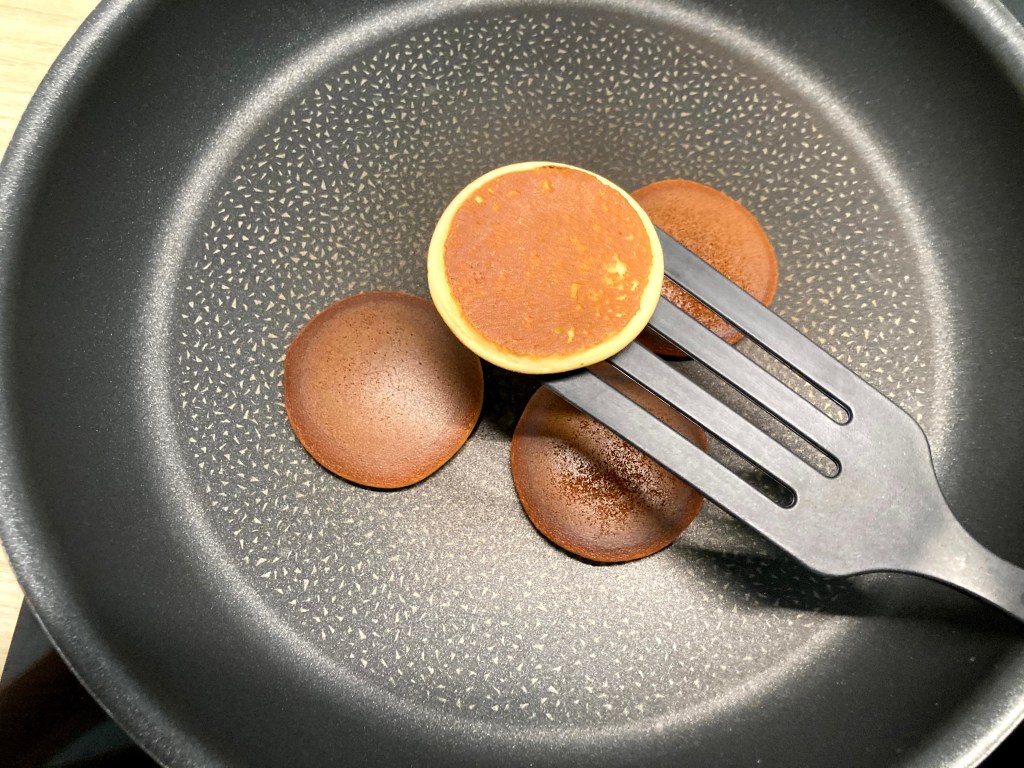
7. Cook the other side. Cook the other side for another 1-2 minutes until it turns brown.
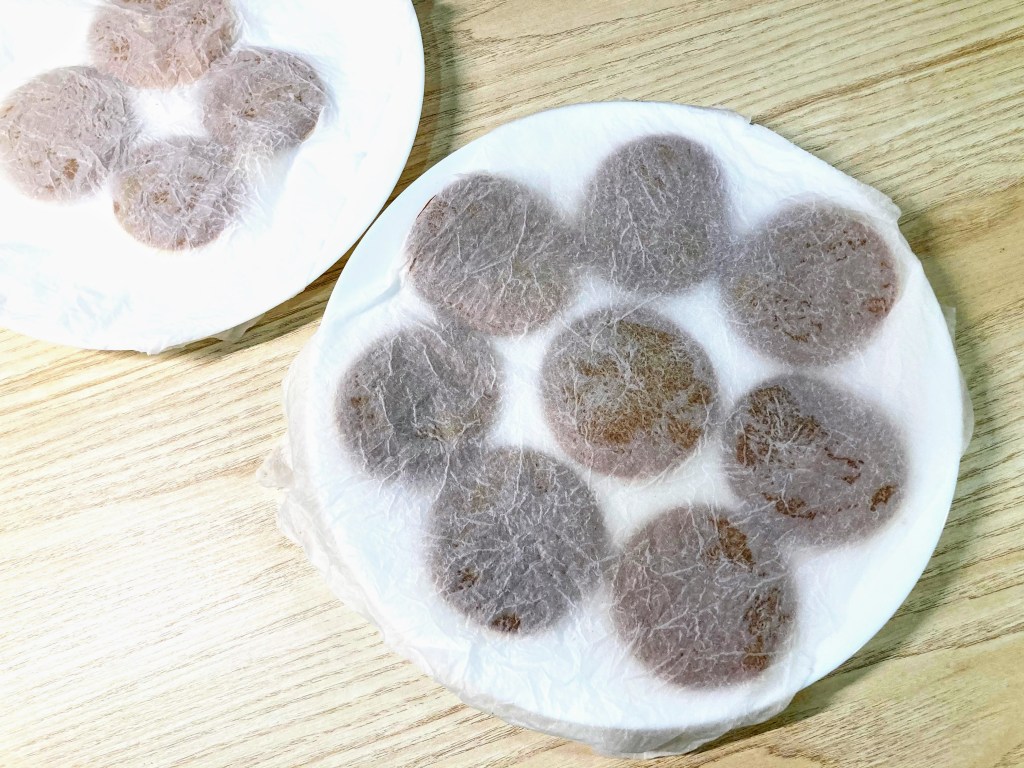
8. Cover with wet towel. Cover the pancakes with a wet towel to moisten them. (As you can see in the picture, made two small ones with the leftover batter. Always make even numbers as we need two pancakes to make one dorayaki.)
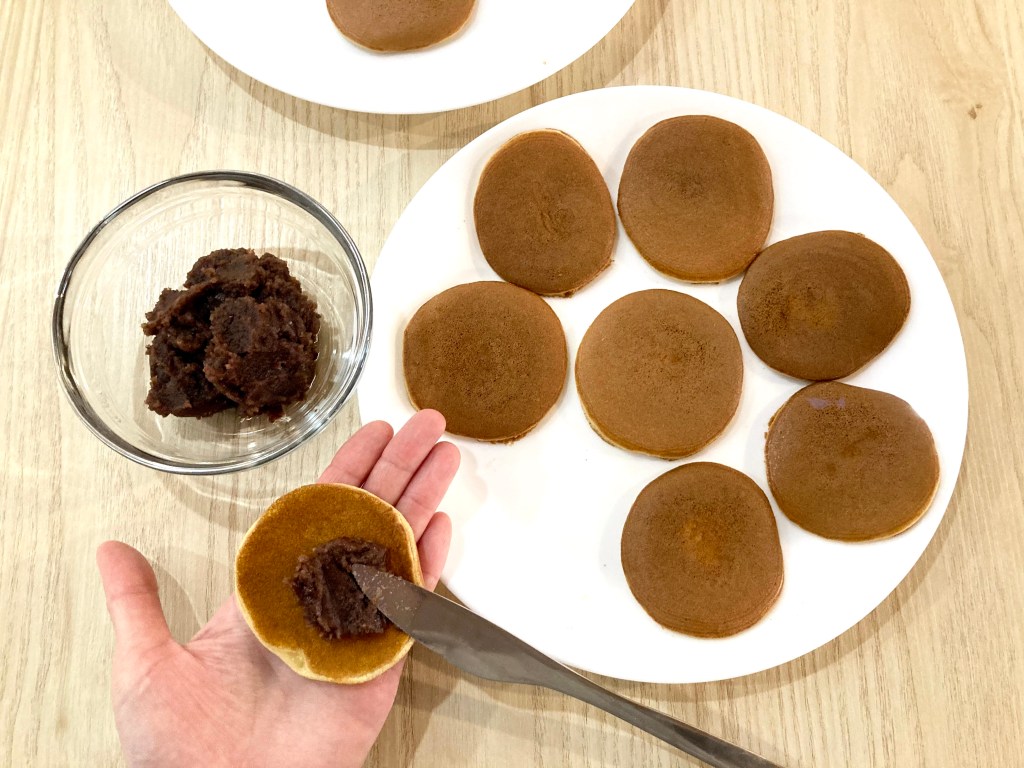
9. Spread anko inside. Make pairs of pancakes in similar size. Spread anko7 on one of them and cover it with the other one.
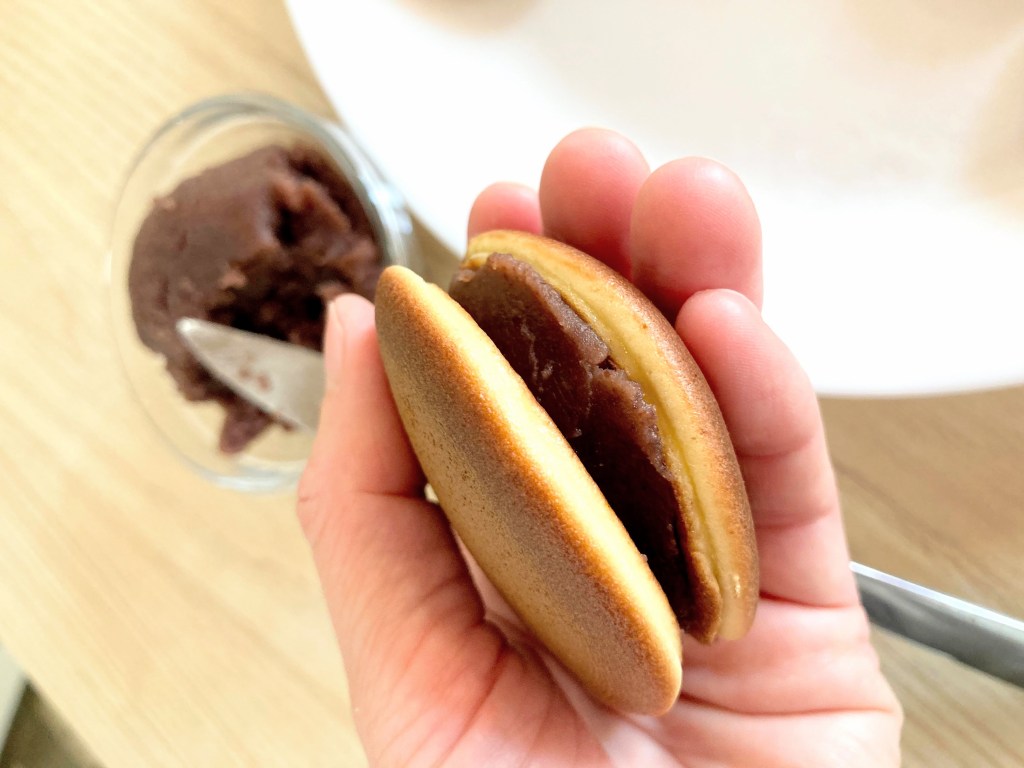
Done! Wrap individually in plastic wrap if you are not serving immediately. I find them tastier (softer and more moist) the next day.
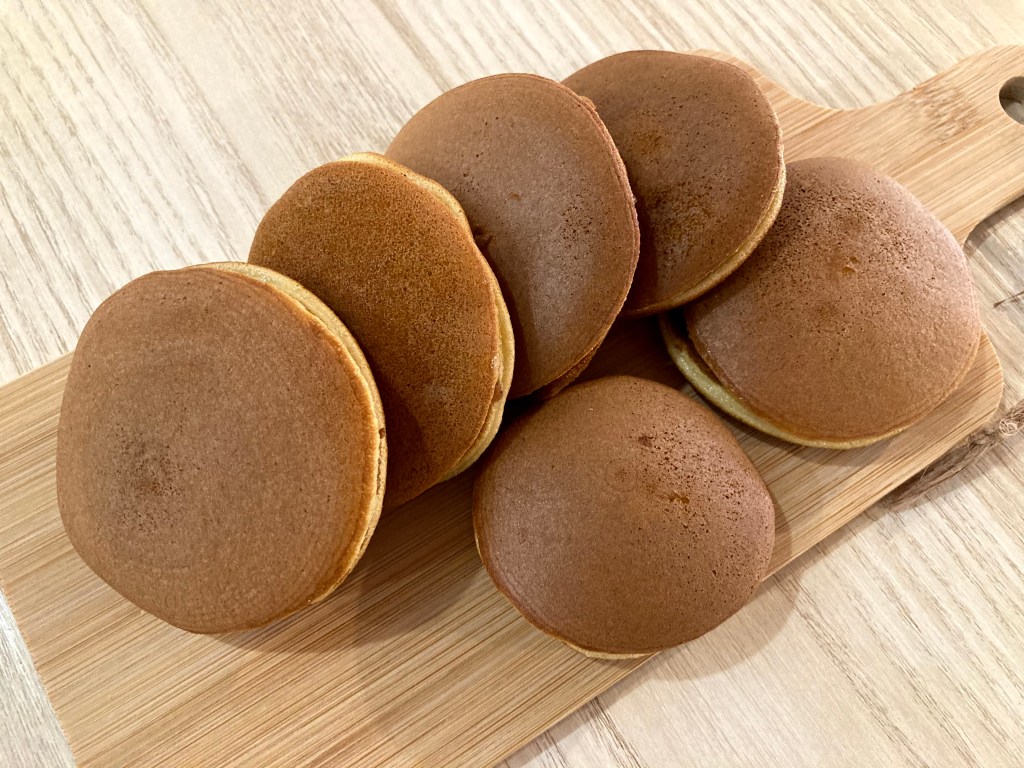
What to do with leftovers? No need to refrigerate them, but consume within 2-3 days, as anko can go bad fairly quickly. Or you can keep them frozen for up to 3 months (and eating them frozen actually tastes great too!).
If you are unsure if your guests (especially kids) will like your dorayakis, make some with Nutela inside, which are not really authentic drayakis, but are almost always successful with non-Japanese kids!
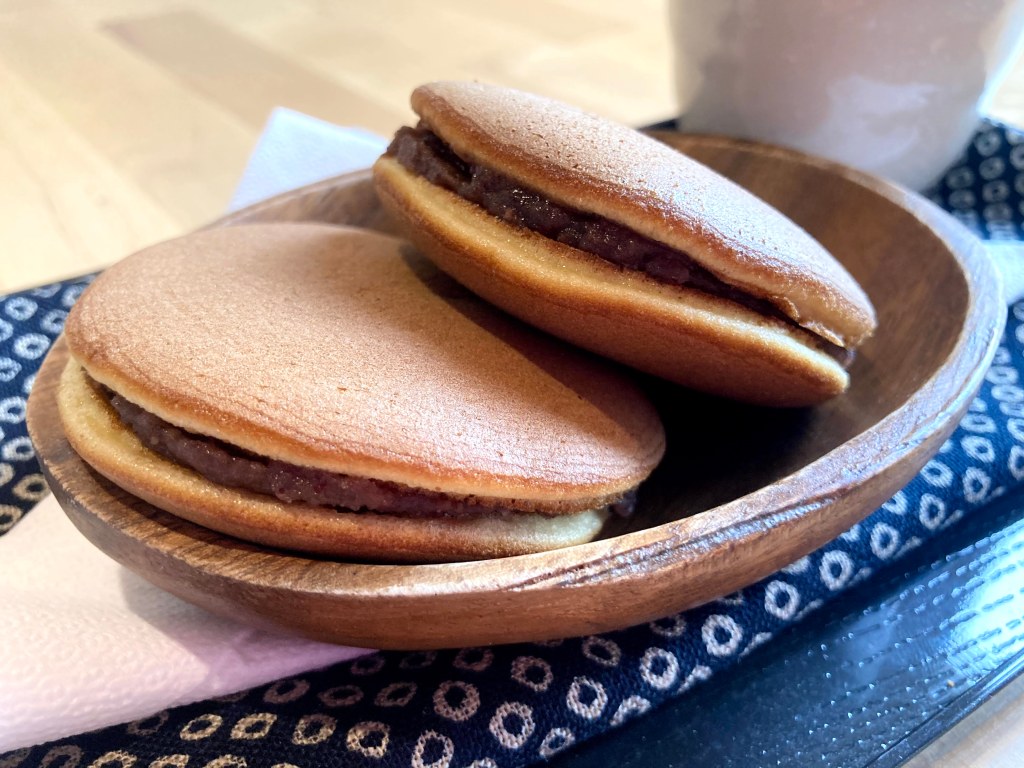

 Kazuko's Recipes