
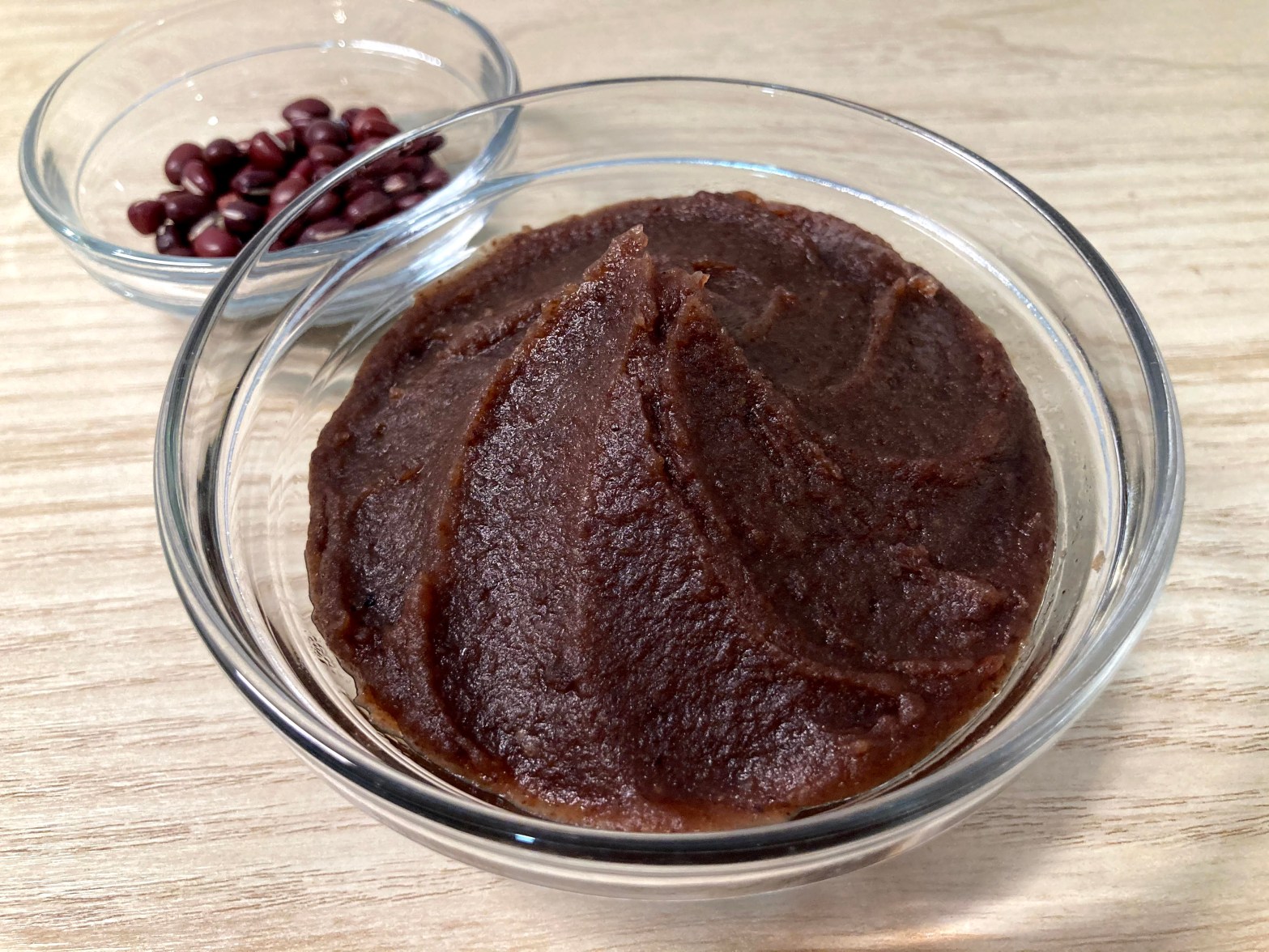
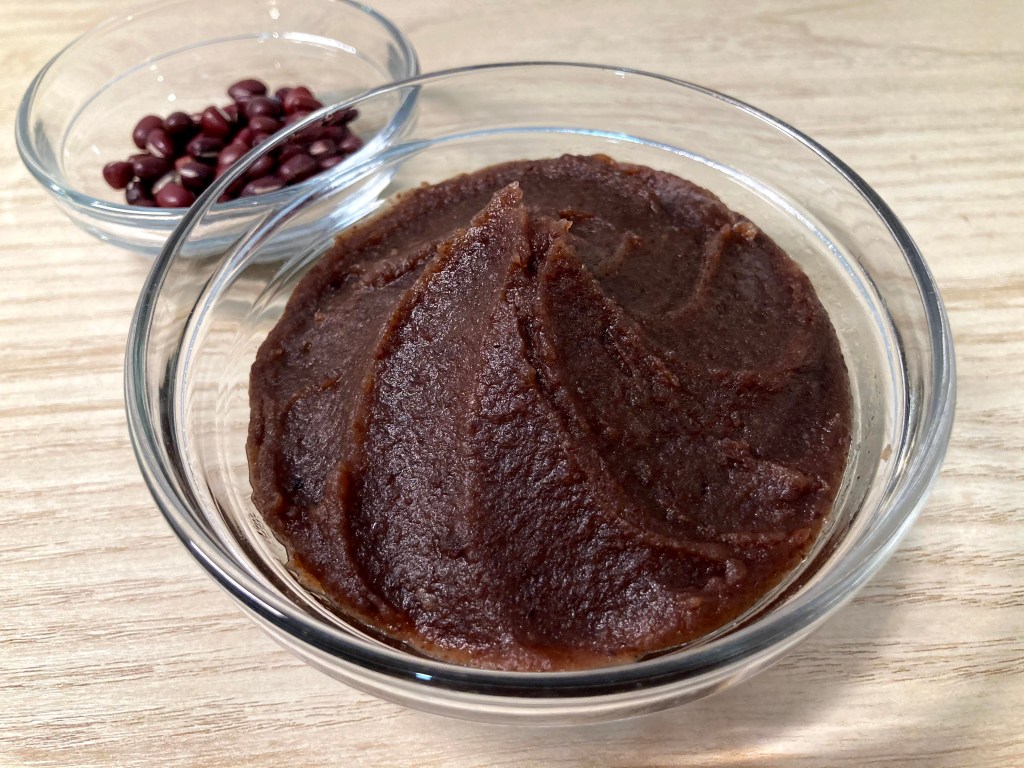
Anko, or sweet read bean paste, is the equivalent of chocolate in the western world and is used in many Japanese traditional sweets. In Japan, many people just buy ready-made paste, rather than making one from scratch. But if you live outside Japan like me, you may find it difficult to find one or the price is often exorbitant. So, I started making homemade anko a couple of years ago, and it was surprisingly easy and I finally stopped stuffing my suitcase with anko when I travel back from Japan! With anko, you can prepare a wide variety of traditional Japanese sweets, like Dorayaki and Daifuku, the recipes for which I plan to post later.
Cooking time: 60-90 minutes
INGREDIENTS

- Azuki beans: 100g (or any amount)
- Sugar: 100g (same amount as azuki)
- Salt: 1/16 tsp (a pinch)
This recipe yields about 300g of anko, which is enough to make, for example, 15 dorayakis.
Adjust the amount of sugar to your liking. This recipe uses the 1:1 ratio, but I recommend adding 10-20% more sugar if you are accustomed to eat western sweets. Any leftover anko can be kept frozen for up to 3 months.
BEFORE YOU START
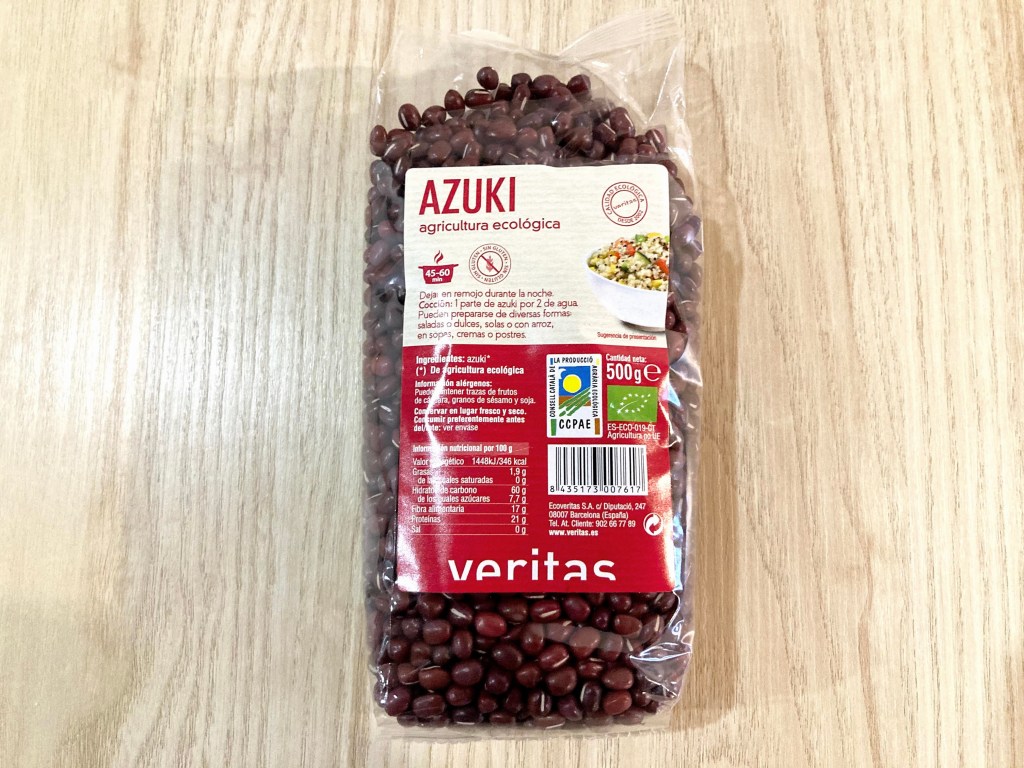
Q. What is Azuki beans?
The azuki bean is a small red bean, used in Japanese and Asian cooking, and is a good source of protein, fiber, as well as various vitamins and minerals. Don’t be confused with kidney beans, azuki beans are rounder and about half the size of kidney beans.

Q. Tsubu-an vs Koshi-an
Just like peanut butter, anko can be chunky (“tsubu-an“) or smooth-textured (“koshi-an“), and it’s a matter of personal preference. This recipe is to make a quicker version of Koshian with hand blender, but professionals use clothes or strainer to filter the beans to make anko smoother (which can be a very elaborate process). If you want to make tsubu-an, skip the pureeing process in Step 7.
NOW, LET’S START!

1. Wash azuki. Wash the azuki beans with water to remove dirt. Azuki is a relatively soft bean, so it is not necessary to soak it in water before cooking.
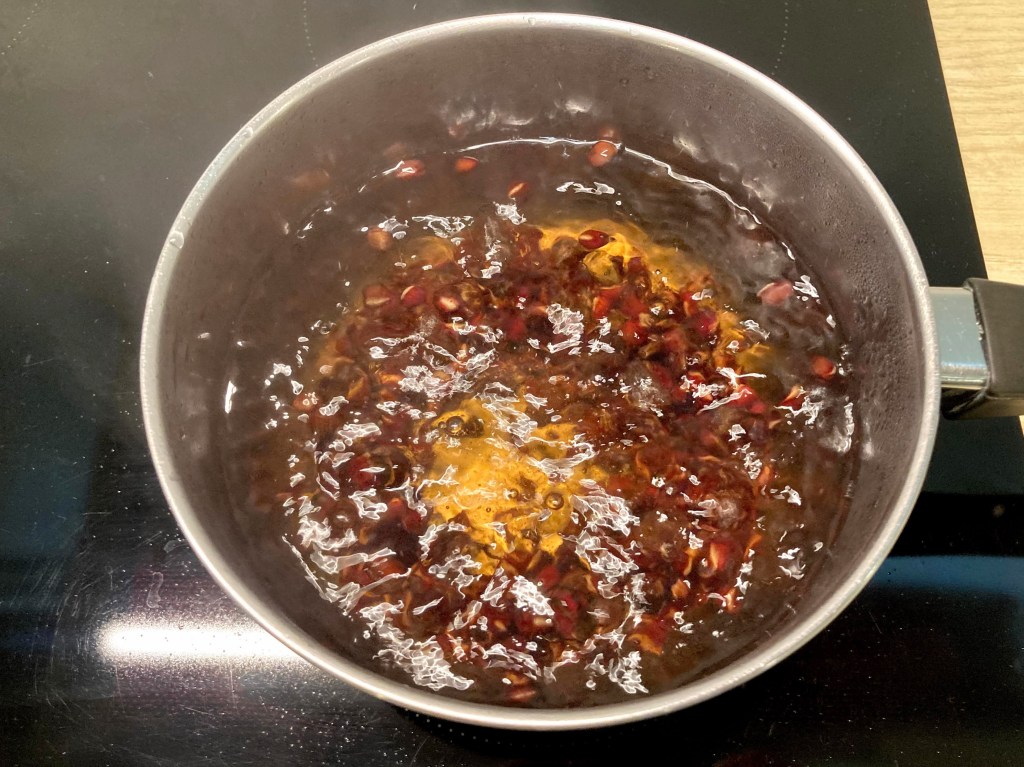
2. Boil azuki. Bring the azuki in a pot with plenty of water to a boil on medium heat. Stop the heat when the water starts boiling, cover the pot with a lid on, and rest the azuki for 10 minutes.

3. Drain the water. Drain the water to discard any “aku” (bitterness) extracted from the azuki.
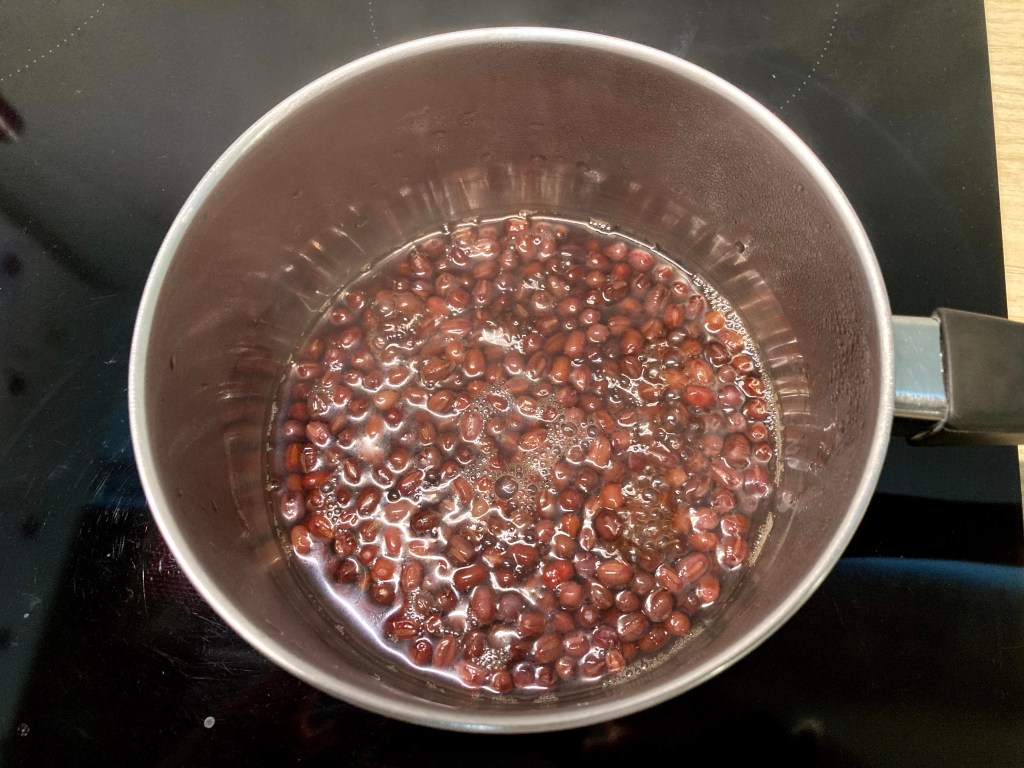
4. Boil again. Put back the azuki in the pot and add clean water, but this time only enough to cover the azuki. Bring it to a boil on medium heat, then simmer it on medium-low heat for 40-60 minutes.

5. Add water several times. Keep adding enough water just to cover the azuki. I usually set a timer for 10 minutes to remind me so that I don’t have to keep watching. The amount of time needed to boil depends on the amount and dryness of the azuki. The azuki I use (100g) usually needs 40 minutes or so until it becomes soft.

6. Check the softness. Pick one of the beans with a spoon and check if you can mash it with fingers. If you can mash it all the way inside, the beans are done. If it is hard in the center (like the one shown in the back of the picture), continue cooking. Be careful not to burn your fingers!
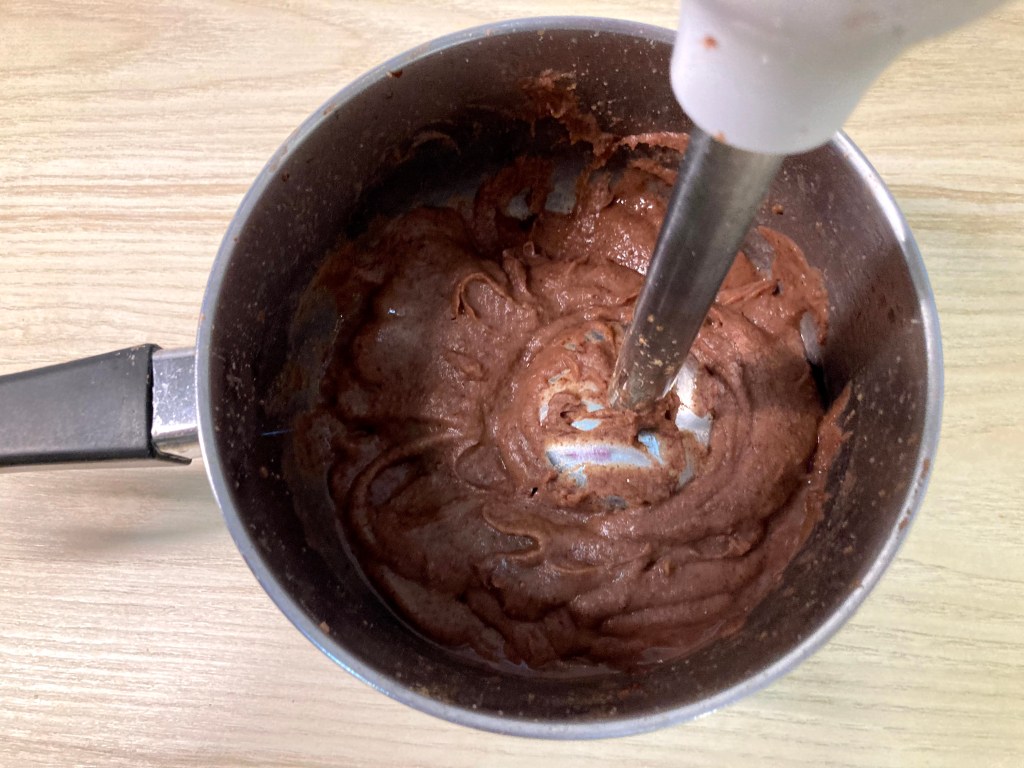
7. Puree the azuki. Turn the heat off when the azuki became soft. Keep the water in the pot with the azuki, and puree them with a hand blender until there is no tissue left. Add water if necessary, just enough to be able to puree.
*Skip this step if you are making tsubu-an (chunky anko). Drain the water when the azuki became soft and move to step 8.

8. Add sugar & salt. Put the pot back on the stove. Add sugar, start the heat on medium, and keep stirring until the sugar is completely dissolved, and add a pinch of salt.

9. Done! Keep stirring until any excess water evaporates. Stop the heat right before the anko achieves the texture of peanut butter (it will harden a little when it cools down).
While western sweets, like cakes and cookies, have become popular in Japan, Japanese traditional sweets are still very popular and widely eaten in Japan. When you visit Japan, try some of the traditional Japanese patisserie shops which have been in making anko and traditional Japanese sweets for centuries.

 Kazuko's Recipes